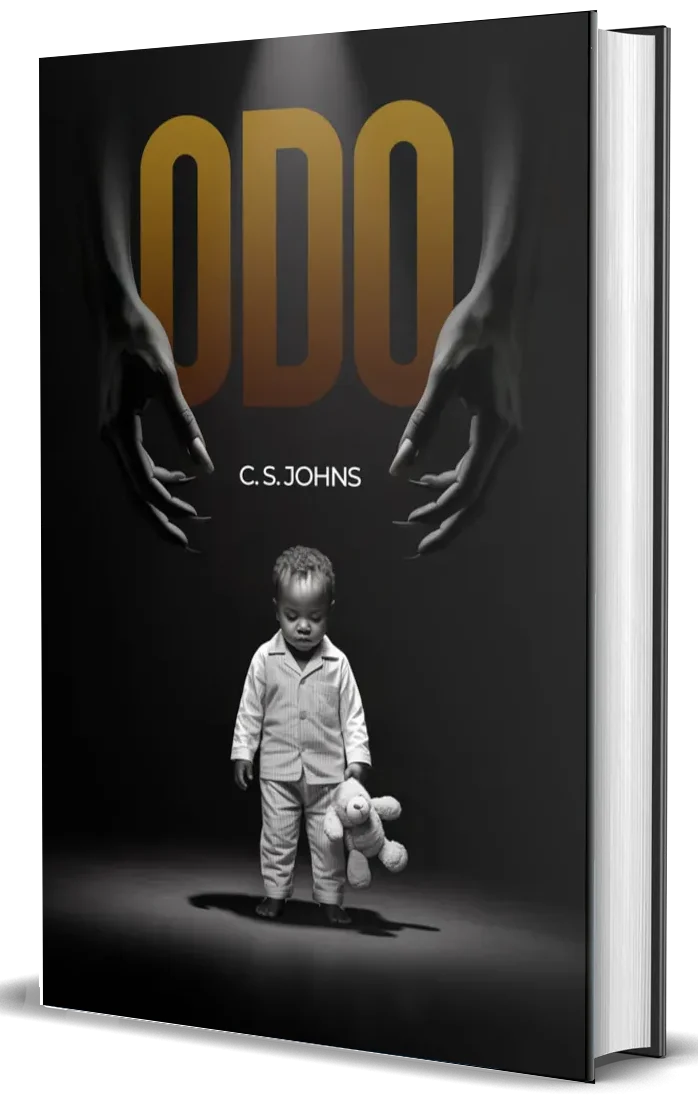
In horror fiction, belief is often the thin line between survival and doom. Characters who dismiss warnings, signs, and traditions are frequently the first to suffer. Odo by C. S. Johns is a chilling reminder of this recurring truth. The novel centers around Faustin, a rational-minded medical professional, whose initial disbelief in his culture’s supernatural folklore nearly costs him everything. Like many horror protagonists, Faustin believes science and logic are his shields—but as the story unfolds, this very skepticism becomes his greatest vulnerability.
Faustin’s Faith in Science
C. S. Johns constructs Faustin as a highly educated, modern man—a doctor trained in Western medicine and grounded in rational thought. In Odo, his skepticism is portrayed as a strength at first, a symbol of progress and modernity. But when the ancient demon Abiku begins to manifest, Faustin’s unwillingness to consider spiritual warnings leaves his newborn child dangerously exposed. Johns uses Faustin’s initial refusal to believe in the supernatural as a central tension, illustrating how intellectual arrogance can blind characters to hidden truths. In horror fiction, such blindness often invites the very threat characters wish to avoid.
Ignoring Warnings, Inviting Evil
In Odo, multiple characters warn Faustin about the dangers of the Abiku—a demonic force from Yoruba folklore that preys on children. His friend John offers protective charms, and elders reference ancestral knowledge, yet Faustin scoffs at these gestures. C. S. Johns uses these scenes to show the danger of cultural detachment. The horror escalates not because the evil is unstoppable, but because Faustin fails to prepare for it. The novel demonstrates a common pattern in horror: when protagonists reject belief, they also reject their only means of defense. In that vacuum, the monster thrives.
The Role of Cultural Wisdom
Horror stories rooted in folklore, like Odo, emphasize that belief isn’t just superstition—it’s survival. C. S. Johns draws from West African traditions and spiritual practices, portraying them as essential tools in the fight against darkness. When Faustin finally acknowledges the power of the old ways—such as the amulet John tried to gift him—it marks a turning point. His skepticism gives way to acceptance, and with that comes empowerment. In horror fiction, the embrace of cultural wisdom is often the hero’s first real step toward defeating evil.
Belief as a Weapon
By the climax of Odo, Faustin’s transformation from skeptic to believer mirrors a larger message from C. S. Johns: belief is not weakness; it’s strength. In a genre where characters are frequently powerless, belief restores agency. Whether it’s through religious rituals, ancestral memory, or symbolic objects, faith provides a path to resistance. Odo shows that it is not enough to recognize danger—one must also believe in the tools needed to fight it. Skepticism may offer temporary comfort, but belief offers protection.
Horror fiction is filled with ghosts, demons, and curses—but perhaps its most persistent villain is disbelief. In Odo by C. S. Johns, the power of belief is not just a theme—it’s a lifeline. Faustin’s journey from doubt to understanding serves as a cautionary tale about the cost of ignoring spiritual truth. C. S. Johns invites readers to question not just the existence of evil, but our readiness to confront it. In the end, belief doesn’t just fight fear—it outlasts it. And in horror, that’s the difference between life and death.
Order your copy from Amazon to read the full story: https://www.amazon.com/dp/1968296719